
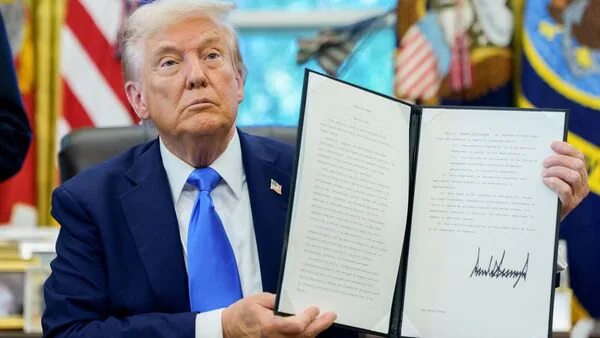
In a move that’s rattling the tech and medical sectors, the U.S. government has announced a dramatic change: any new H-1B visa petition filed after September 21, 2025, must include a one-time $100,000 payment from the sponsoring employer. The proclamation affects specialty occupation workers trying to enter the U.S. and has ignited panic across industries that depend on international talent. USCIS FAQ: The change does not apply to current H-1B holders or petitions filed before that effective date. Reuters
This overhaul comes along with another proposal: revising the selection process to give preference to higher-paid and more highly skilled applicants if demand exceeds supply. Reuters Altogether, it’s being called one of the most sweeping changes to the skilled worker visa system in decades.
What the New Rule Means in Practice
The Presidential Proclamation titled “Restriction on Entry of Certain Nonimmigrant Workers” sets out the changes, effective 12:01 a.m. EDT on September 21, 2025. White House Proclamation: The guidance from USCIS and the Department of State confirms that the fee is required only for new H-1B petitions filed after that time. Renewals, extensions, amendments, or employers changing status for workers inside the U.S. are generally exempt. Employment Law Worldview
That means people already in H-1B status aren’t stranded, plus those with valid petitions filed earlier should avoid the fee. But for newcomers or companies hiring from overseas, this raises the entry cost massively. Boundless Immigration
In parallel, the administration wants to change the H-1B lottery mechanism to reward wage level and skill, giving an advantage to high-paying employers. The idea is to discourage abuse of the system by firms that apply broadly for lower-paid roles. Critics argue this may be a smoke screen for making the H-1B far less accessible. Al Jazeera
Reactions from Industry, Economists, and Workers
The tech sector is pushing back hard. JPMorgan economists warn that the new fee could slash 5,500 work authorizations per month if companies pull back from filing. Business Insider
Hospital groups are also alarmed. Medical systems in rural areas depend on international doctors. The proposed cost that is too high could worsen physician shortages, especially where American-trained doctors are unwilling to relocate. Reuters
Economists warn the move may slow U.S. growth. The Guardian reports that many view this as a major risk to the innovation economy, with firms unable to hire skilled workers or forced to move operations overseas. The Guardian
Immigrants and advocacy groups describe this as a de facto barrier. Some see it as turning the visa program into a “luxury permit” that only big companies can afford. Others argue such changes discourage global talent and make the U.S. less competitive.
Risks, Legal Challenges & Unresolved Questions
One big risk: legal backlash. Some argue this proclamation bypassed Congress or violates equal protection or administrative law principles. Already, questions are being raised about whether the executive can impose such a sweeping cost increase unilaterally.
Another issue: clarity is missing in several zones. Will the fee ever apply to someone outside the U.S. who switches employers? Or someone who travels abroad while on H-1B? Guidance is still vague. Grossman Young Immigration
There is also the question of national interest exceptions; the proclamation allows some petitions to be granted without paying the fee if certain criteria are met, but the decision standards are opaque.
Why This Matters (Beyond the Headlines)
The H-1B program has long been a backbone for U.S. leadership in technology, healthcare, research, and academia. The American Immigration Council’s fact sheet shows how frequently H-1Bs are used and how small changes ripple across sectors. American Immigration Council
This change threatens to push companies to relocate abroad, reduce hiring of foreign grads, or automate roles that had been filled by skilled immigrants. It could dampen the pipeline that fuels growth in startups and research labs.
But there is a spark of defiance. Some tech CEOs are calling for legal suits. Some universities are lobbying for carveouts. In the coming months, the balance between American labor protection and global talent attraction will be contested in courts and boardrooms.
Final Thoughts
The H-1B drama of 2025 is far more than policy play. It is a pivot point a moment when the U.S. is rewriting how it values global talent. For companies, workers, and students eyeing America, this is a turning point. If the U.S. wants to remain a magnet for innovation, it must be careful not to price out the very people who bring ideas, skills, and drive.