
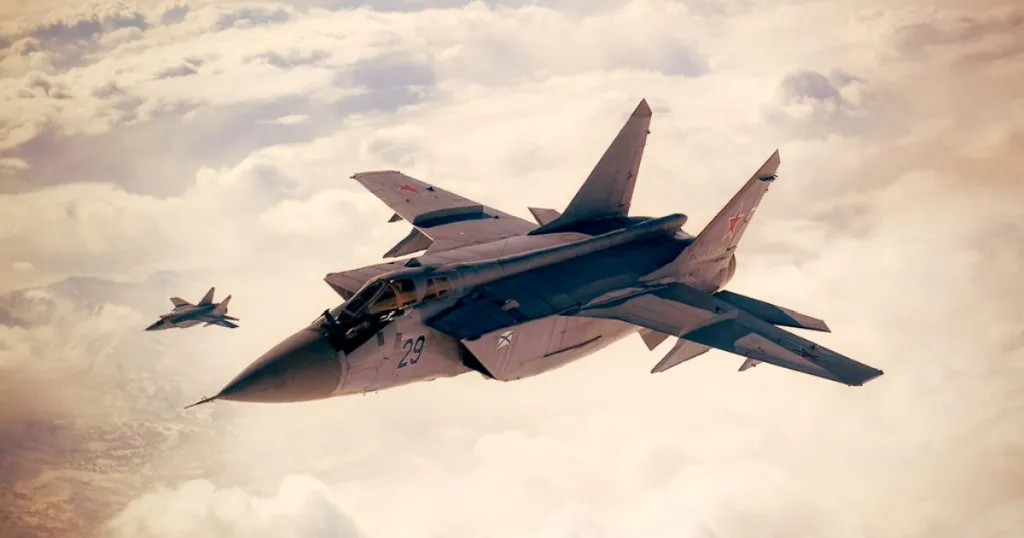
Estonia confirmed that three Russian MiG-31 fighter jets violated its sovereign airspace on September 19, remaining for approximately twelve minutes before NATO aircraft intercepted them. The Estonian Ministry of Defence described the incident as “unprecedentedly brazen,” immediately summoning Russia’s top diplomat in Tallinn and calling for consultations under NATO Article 4. According to Reuters, the aircraft flew over the Gulf of Finland near Vaindloo Island without flight plans, their transponders switched off, and without responding to air traffic controllers.
In response, NATO’s Baltic Air Policing mission scrambled Italian F-35 fighter jets from Ämari Air Base to escort the Russian aircraft away. Estonia’s Prime Minister Kaja Kallas warned that such actions directly challenge European security, reinforcing the importance of rapid NATO response systems. DefenseNews reported that NATO leadership is treating this as one of the most serious violations in recent years.
Dispute Between Estonia and Russia
While Estonia insists on clear evidence of intrusion, the Russian Defence Ministry disputes the claim. According to Reuters, Moscow stated the jets flew legally over international waters en route from Russia to Kaliningrad. Russia argues that its pilots kept a safe distance of three kilometers from Estonian territory and that NATO’s accusations are politically motivated.
Estonia’s Foreign Minister Margus Tsahkna, however, labeled the incident as a deliberate provocation, stating in ERR News that this was the fourth such violation of Estonian airspace this year. According to AP News, the violation has reignited debate within NATO about how to deter repeat incursions.
NATO and European Reactions
NATO officials condemned the breach, emphasizing that flying without transponders and ignoring air traffic controllers poses risks to civilian aviation. The Guardian reported that European Union leaders are weighing collective diplomatic responses. According to Politico Europe, some Baltic officials are urging NATO to increase the permanent presence of allied aircraft in the region.
Financial Times highlighted that airspace violations have become a recurring point of friction in the Baltic region, with past incidents often dismissed as navigational errors. Analysts now argue that the length of this intrusion suggests a strategic show of force rather than an accident.
Expert and Public Opinion
Military analysts interviewed by BBC News argue that the choice of MiG-31s was intentional. Known for their high-speed interception capabilities, these aircraft are often used by Russia to project power. Some Estonian defense officials cited by Euronews believe Moscow wanted to test NATO’s reaction time.
Public opinion in Estonia is also heating up. Local media outlets such as Postimees reported that residents living near the Gulf of Finland expressed concern about rising tensions. Comment sections on Estonian outlets like ERR show frustration over repeated incursions and calls for stronger national defense measures.
Western commentators are equally vocal. In CNN’s coverage, NATO diplomats argue that failing to respond decisively could embolden Russia further. On the other hand, Al Jazeera raised the possibility that Moscow is using these incidents to provoke overreaction from NATO states, potentially creating narratives for its domestic audience.
What Happens Next
The Estonian government has formally requested an emergency NATO meeting under Article 4, a move confirmed by Politico Europe. If approved, this would mark a significant escalation in collective defense planning. The Guardian explained that Article 4 consultations allow member states to share intelligence and coordinate countermeasures, though it does not automatically trigger military action.
Future responses could include an increase in NATO patrols over the Baltic Sea, more advanced radar installations in Estonia, and potential sanctions coordinated through the European Union. According to Reuters, Estonia will also push for broader discussions at the upcoming NATO defense ministers’ meeting.
Conclusion
The violation of Estonian airspace by three Russian MiG-31s highlights the growing volatility in the Baltic region. Estonia insists this was a deliberate act, Russia denies crossing any borders, and NATO finds itself pressed to demonstrate credibility. With Article 4 consultations on the horizon and European leaders weighing stronger deterrence measures, this incident is more than a local border issue. It is a test of NATO unity, European resolve, and Moscow’s appetite for provocation.