Nothing Unveils “Playground” AI Tool That Builds Mini Apps from Prompts
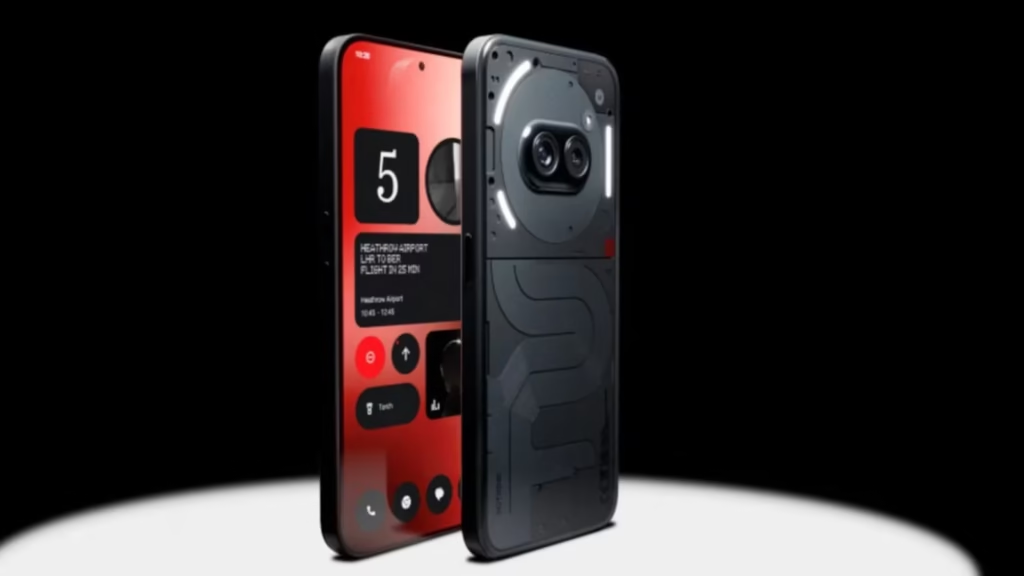
Nothing this week announced Playground, a new AI-based tool that generates mini apps or widgets from natural language prompts. According to TechCrunch, users can type commands like “build me a meeting summary widget” and the system will output a working widget interface via its Essential Apps platform. Currently, full-screen apps aren’t supported yet. (TechCrunch)
The Verge covers this as Nothing’s “first step” toward a more AI-native skin overlay on Android, under a branding layer called “Essential.” Playground is currently focused on widgets, but the trajectory hints at eventual expansion to full apps. (The Verge)
How Playground Works: Widgets First, Apps Later
Playground lets you generate minimal apps like flight trackers, quick notes, or reminders. These run as widgets on your phone. TechCrunch explains that more technical users may tweak the generated code or expand functionality incrementally. The system is still under development; Nothing says full app generation isn’t mature enough yet.
This approach is cautious—and smart. By limiting scope to widgets initially, Nothing can refine model safety, permission controls, and performance before opening the gates to full apps. FindArticles describes this as a “prompt-to-widget” experiment with a community remix layer via the Essential Apps hub. (FindArticles)
Why This Matters (Keyword Focus: Nothing Phone AI app creation)
If the Nothing Phone can genuinely allow users to create software with prompts, it changes what a “smartphone OS” is. The keyword “Nothing Phone AI app creation” is no longer hypothetical—it may become a real differentiator among Android makers.
This move positions Nothing as more than aesthetic design. It signals ambition: to redefine smartphone software around generative AI. The funding context supports that: Nothing recently raised $200 million led by Tiger Global, reaching a $1.3 billion valuation. Reuters covered that round, noting the company intends to integrate AI deeply into future devices. (Reuters)
Carl Pei, Nothing’s cofounder, has also spoken of launching “AI-native devices” in 2026. India Today reported on those ambitions, suggesting Nothing is planning more than just phones—it’s thinking across hardware categories. (India Today)
What Industry Voices Are Saying
Early reaction is mixed. Some see Playground as a clever “vibe-coding” experiment, while others warn it’s still a toy until full apps are possible. Critics compare the effort to past systems that allowed rudimentary app creation—but failed to scale.
Tech observers on X (Twitter) point out that Apple’s Shortcuts was an early step in user custom tools, but it never replaced full app development. Others compare Nothing’s pivot to startups in the “vibe coding” space. As TechCrunch reported, a startup called Anything recently achieved massive traction by offering end-to-end app creation for nontechnical users. That paints a possible competitive benchmark. (TechCrunch on Anything)
Reviewers at The Verge warn that Playground is preliminary. They note the claim of an AI-native OS is overblown at this stage, since the base system is still Android. But they call the experiment “fascinating.” (The Verge)
Challenges Ahead: Security, Scale, and Utility
Even the promoters admit limitations. Right now, only simple widget apps are supported. Full app creation involves more risk. Code generation must handle permissions, data persistence, security borders. A misstep here could let malicious or buggy widgets slip through.
Performance is another concern. Generating and running apps on-device demand CPU, memory, battery. If the base hardware isn’t strong, the user experience may suffer.
Finally, market positioning matters. Nothing’s share of the smartphone market is small. Wikipedia notes the company holds less than 1 percent globally. It will need AI features like this to create differentiation. (Wikipedia)
Roadmap and What to Watch
- Will Nothing expand Playground from widgets to full apps? TechCrunch says that capability remains aspirational for now.
- How strict and transparent will security and moderation controls be? That will be a litmus test for adoption.
- Can this become a paid or subscription model? Nothing’s Essential Space already has AI productivity features; rumors suggest future monetization. Android Central flagged hints that advanced AI perks might eventually carry a subscription price. (Android Central)
- Will users actually adopt prompt-building? The early novelty may wear off unless the results are dependable over time.
Final Take
Nothing’s move to let users build mini apps from prompts is real and now public. The tool is early, limited to widgets today, but the intent is clear. If Nothing can scale this to full apps, maintain safety, and get user buy-in, it could rewrite expectations for smartphone software. Right now, we are watching the first act in what may become a larger shift in how phones and AI work together.