
Direct-to-phone satellite texting edges toward takeoff, with voice and data close behind
International Desk — August 30, 2025
The promise of sending a text from the middle of nowhere—no special phone, no bulky gear, just the sky above you—has finally moved from demo to deployment. After a year of test messages and trial partners, multiple carriers are now preparing commercial direct-to-device (D2D) services that talk to ordinary smartphones via satellites acting like cell towers in orbit. In the U.S., T-Mobile’s Starlink-powered T-Satellite service went live for consumers in late July, starting with SMS/MMS and short audio clips, with a first wave of app-level data due October 1. Elsewhere, new trials and partnerships point to a broader late-2025 rollout for messaging, and voice/data services following into 2026 as constellations and ground software mature. Reuters+1
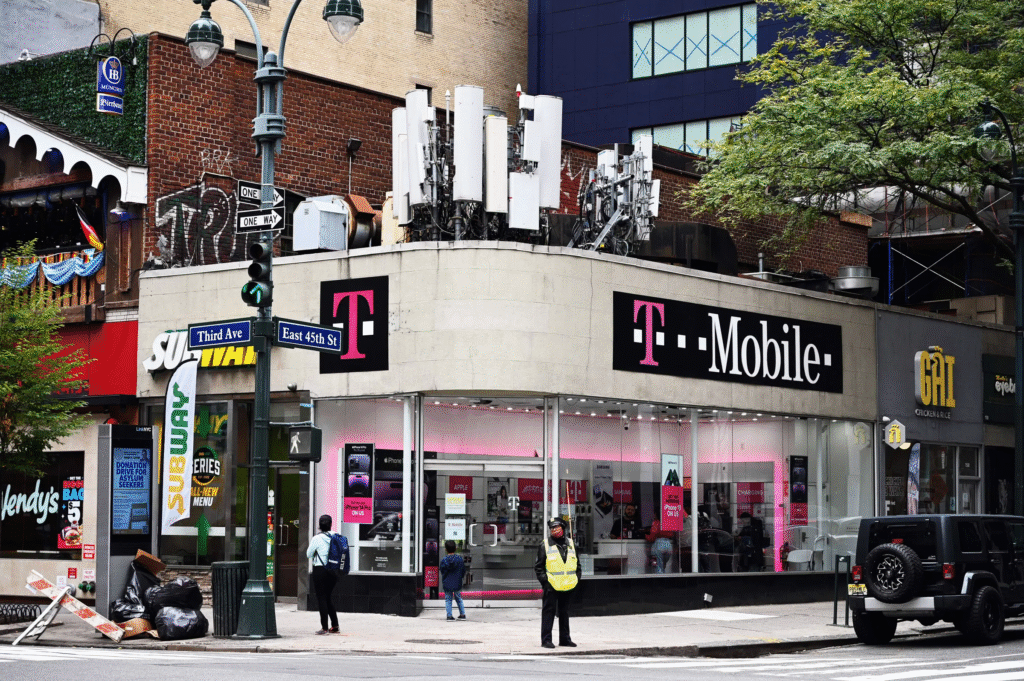
The near-term picture looks like this: texting first, then lightweight data, then more. T-Mobile’s launch marked a pivotal moment because it uses unmodified LTE/5G phones and standard messaging apps—no attachments, no unfamiliar UI—so when you step off the grid your phone simply hands off to space the way it would to a rural macro tower. The July launch was the public culmination of a beta that signed up more than a million users; now the company says the next step is letting approved apps trickle bits over a satellite link that behaves like a very slow 2G network. It’s not a replacement for terrestrial service; it’s a safety net for the places fiber and towers don’t reach. Reuters
Internationally, momentum is building. In Ukraine—where war damage makes resilient connectivity more than a convenience—the country’s largest operator Kyivstar successfully tested Starlink’s direct-to-cell link this month, trading messages on standard phones over LEO satellites. Kyivstar and parent VEON expect commercial messaging by late 2025 and mobile satellite broadband/voice from Q2 2026, positioning Ukraine as an early European launch market. That timeline aligns with what many engineers already see: messaging is technically easier to scale; continuous voice and app data take denser satellite coverage, smarter handoffs, and improved radio stacks on both sides of the link. Reuters+1
For SpaceX’s Starlink, which powers T-Mobile’s service, the road map has been hiding in plain sight since the first six Direct-to-Cell satellites flew in January 2024. Starlink’s own technical note describes the approach: a custom eNodeB on each satellite speaks standard LTE, phones connect with no firmware changes, and traffic rides the Starlink laser mesh back into a partner carrier’s core just like roaming. That document also listed the early operator club—T-Mobile (U.S.), Rogers (Canada), Optus (Australia), One NZ (New Zealand), KDDI (Japan), Salt (Switzerland), Entel (Chile/Peru)—a coalition that has since expanded to include Kyivstar as pilots move toward service. Starlink+1
If you zoom out, this isn’t a one-company story. AST SpaceMobile, backed by AT&T, Vodafone and Google, is building a rival network designed for higher-throughput links directly to 4G/5G smartphones, and has been touting video-call demonstrations as it completes key chip work for its next-gen satellites. The strategies differ on architecture and rollout, but they share a goal: take the “no signal” out of maps, ships, mountains and highways without asking people to buy special handsets. Whether you’re a carrier or a satellite operator, closing that gap is good business—and, in disasters, genuinely life-saving. Business Wire
Standards have quietly made this moment possible. 3GPP Release 17 introduced the first formal support for Non-Terrestrial Networks (NTN), giving vendors and carriers a common language for phone-to-satellite links. The spec work might sound dry, but it’s what lets a normal LTE/5G phone talk to a fast-moving “tower” hundreds of kilometers up and survive handoffs, Doppler shift and timing constraints without a science-project app. Those boring details are how a risky experiment becomes something your mom can use. 3GPP
There are, of course, caveats. Early links are bandwidth-poor and weather-sensitive compared with ground networks. Expect minutes-long delays for big images or clips, and a strong bias toward clear skies and open views. Even inside that envelope, the long arc is encouraging: more satellites in the right orbits mean more beams, less time waiting for a pass, and better odds that data sessions won’t drop mid-message. T-Mobile’s staged plan—text now, app data next, richer services later—is really a capacity plan in disguise. The industry is learning, in public, how to ration bits where they matter most. Reuters
The business logic is just as simple. Carriers get to promise coverage “wherever you can see the sky,” relieve pressure to build uneconomic rural towers, and keep customers inside familiar plans instead of ceding them to stand-alone satellite messengers. Satellite operators, meanwhile, get a path to mainstream adoption without chasing niche hardware. And end users—the hikers, truckers, fishers, farmers, oil-field crews, disaster teams—get the thing they’ve been promised for twenty years: a Plan B that lives in the phone they already carry.
What should readers watch as this shifts from headlines to habit? Two things stand out. First, policy: national regulators are still refining the rules for “supplemental coverage from space,” cross-border roaming, and emergency services over satellite. Ukraine’s approach—pairing national security needs with commercial rollouts—will be a test case others study closely. Second, experience: how seamlessly your phone switches, how clearly apps indicate “you’re on satellite,” how billing and throttling are explained—these are the small design decisions that decide whether people trust the system after their first storm, road trip, or mountain hike. The fact that T-Mobile built this into normal plans and UI is a sign the industry wants this to feel boring, not exotic. Reuters+1
The big idea hasn’t changed since the first on-orbit texts: turn satellites into part of the cellular network, not a separate world with separate devices. With U.S. service live for messaging and more countries pointing to a late-2025 start, the center of gravity is shifting from spectacle to service. The next year will tell us how quickly voice and data follow—and whether the quiet promise of “no dead zones” finally sticks beyond the brochure. Reuters
Reporting based on carriers’ announcements, Starlink technical materials, and independent coverage current as of August 30, 2025. Reuters+2Reuters+2Starlink+1